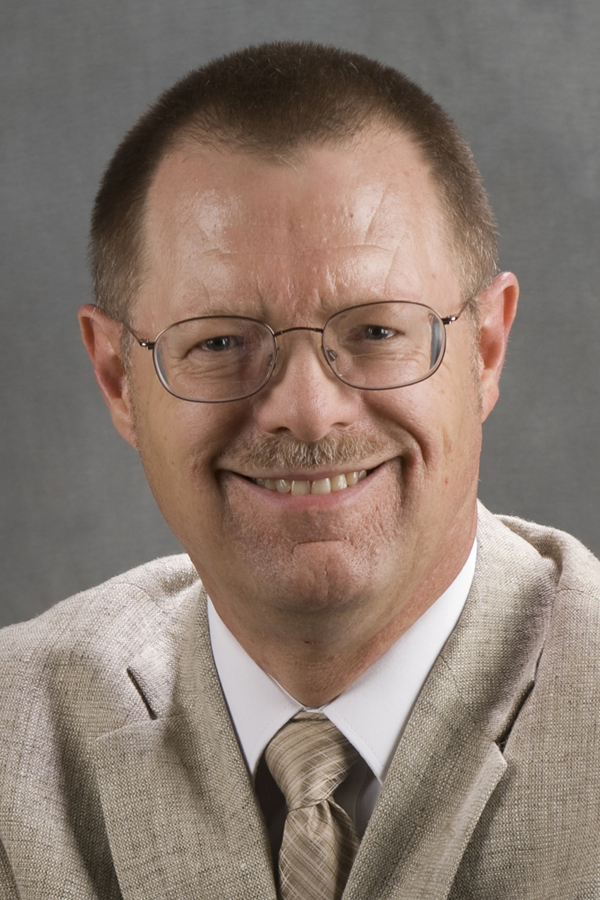
About Kevin D. Finson
The Short Version
Kevin is a retired professor of science education. He taught 34 years at the college level, two at the high school level, and five at the middle school level. He is an earth scientist by training but also has taught physical, life, and other science stuff (as well as some stuff on instructional theory and program evaluation). He really, really likes inquiry learning. He has a sense of humor and really likes puns and shaggy dog stories. Since his retirement, he started to write children’s books for his grandchildren and is now trying to get them published for others to enjoy. During his working career, Kevin was heavily involved in service to professional science education associations and maintained a consistent publication record that included the publication of eight books, some chapters and monographs, and a bunch of refereed (reviewed) journal articles. Most of his publication focus has been on science for students with disabilities and on students’ perceptions about scientists and visual data. Want more? Read below.
The Long Version
The long version has to exist because Kevin was a college professor. You know how long-winded they can be. Since his retirement, Kevin has turned his attention to writing children’s books for his grandchildren. The first bore fruit in early 2020 with the publication of a book about the development and passing of a thunderstorm called A Cloudy Tale. Kevin gave a draft copy to his grandchildren nearly two years earlier and found they frequently opened it to compare its photos to the clouds they saw from the front window of their house. He has several children’s books in development.
Kevin is also known for his interesting sense of humor and had a reputation at his workplace as one who loved to make and share puns. Some folks said Kevin lived for the groans. (In truth, he did!) He expanded his punnery into an interest in shaggy dog stories and even hosted seven years of holiday dinner parties at which friends and colleagues were challenged to make and share shaggy dog stories of their own – for which they could, of course, win award certificates. Kevin has a couple of shaggy dog storybooks in the works, too.
So, what led Kevin to authoring books? That is a long story and began during his high school years when he attempted to write a science fiction novel (which long ago disappeared into the black hole where old manual typewriters go). He had excellent practice writing research papers throughout his college years. One experience he remembers was doing an independent study project with a geography professor. The professor assigned Kevin the task of researching and writing a paper on remote sensing. So Kevin dove in, visited numerous research sites and specialized libraries, and presented his completed paper to his professor before semester’s end. The professor was astonished, thinking Kevin would simply first turn in a set of index cards with notes on them. The professor was so impressed with the paper that he edited it in a few places and submitted it as a second author to one of the most prestigious international geography journals, where it was accepted and published. That, Kevin believes, helped that professor gain his tenure and eventually chairmanship of his department.
Now for some less entertaining information about Kevin. If you don’t like vita and resume types of stuff, you can stop reading at this point. But, if you continue, you will learn about Kevin’s background and publication experiences. Kevin is a professor emeritus of science education at Bradley University in Peoria, Illinois. During his 18 years there, he taught science education courses including teaching methods courses for elementary, middle school, and secondary school teachers, instructional theory, program evaluation, and effective teaching strategies for health science majors. Prior to his tenure at Bradley University, he taught at Western Illinois University in Macomb, Illinois, where he taught elementary science methods and pedagogical content courses in earth science, physical science, measurement, and energy education. His first college teaching was at Valley City State College in Valley City, North Dakota, where he taught science methods courses (elementary and secondary), as well as science content courses in earth science, paleontology, meteorology, oceanology, and geomorphology. Regardless of where and what he taught, Kevin always utilized inquiry learning approaches with his students. Many struggled with learning this way rather than just being given information, but Kevin persisted, believing strongly that learning via inquiry would best prepare students for real life.
Kevin has a long record of service to professional science education organizations. If you don’t want to go through the list, just skip down a couple of paragraphs. He served as a member of the board of directors for the international Association for Science Teacher Education (ASTE) and chaired its Professional Development Committee and Inclusive Science Education Forum, served on its Oversight, Elections, and Professional Development Committees. Kevin was awarded ASTE’s Outstanding Longtime Service (meaning lifetime career service) award in 2016. In his work in publication-related matters, Kevin helped establish the ASTE practitioner journal Innovations in Science Teacher Education. He was also editor of the international Journal of Elementary Science Education for eleven years, and editor of the Illinois Science Teachers Association journal The Spectrum for several years.
Kevin contributed to the standards for the Early Adolescent Science Committee of the National Board of Professional Teaching Standards. He served as chair of the publications committee of the School Science and Mathematics Association, and on editorial review boards of several (inter)national science education association journals, including The Journal of Science Teacher Education and School Science and Mathematics. In addition, he has been a guest reviewer for international journals such as the International Journal of Science Education, International Journal of Science and Mathematics Education, the Journal for Public Understanding of Science, the Journal of Science and Technology, the international Journal for Research in Science Teaching, Research in Science and Technology Education, Research Papers in Education, Science Communications, and Science Education.
Throughout his career, Kevin maintained a consistent record of publication in national refereed and practitioner journals. Among his publications are eight books, several of which focus on visual data in science education, and one on how to modify science instructional materials and assessments for students who have special learning needs. Kevin’s interest in this area stemmed from his desire to help people he knew who struggled with learning science because of a condition called dyslexia. This has been one of Kevin’s primary focus areas of research and writing, and his work eventually led to his publication (co-authoring) of a book about how teachers can make adjustments and modifications to written materials, procedures, and simple equipment so students who have specific learning disabilities can successfully engage in doing science.
The second research area Kevin focused on was students’ perceptions of scientists, which included development of a framework to guide science educators in dealing with students’ conceptions of scientists. His interest in this area had its roots in his commitment to inquiry learning, but explaining all that would require writing a book. In short, Kevin’s starting point for that research and the books resulting from it derived from work on the Draw-a-Scientist Test (DAST) that was originated by Margaret Meade and a colleague back in the 1950s. Kevin’s research and writing with respect to the DAST then evolved into research on pre-service teachers’ perceptions of themselves as science teachers, and then into visual data, what they are and how they are used (or should be used) by both teachers and learners (and curriculum developers).
His publication record includes twelve chapters in other people’s books, five monographs, including one for middle school and high school students on how corn grows and is used, and over sixty refereed professional journal articles. One of the highlights of his “publication” career was co-developing and co-hosting a live satellite television program for middle school science students about careers in science, technology, mathematics and engineering that was shown nationally for three years. Kevin’s most memorable moment from that television show was the day he was demonstrating how one could use a pair of scissors to interrupt the magnetic field of a huge magnet pulling up on a paperclip tied to a string. The trick was to insert the opened scissors into the space between the magnet and paperclip, then close the scissors – which would interrupt the magnetic field and cause the paperclip to fall. The magnet was so powerful it required Kevin to steady his scissors hand with his other hand. Just as he snipped the scissors closed, the scissors jerked up into the magnet, and sliced his thumb. Quickly, Kevin pulled his hand back beneath the demonstration counter, wrapped his thumb in his handkerchief, and sat there bleeding through the remaining half hour of the program. Thankfully, stitches were not needed!
That’s about enough for an introductory author biography. If you want to know more about Kevin’s publication work, take a look at his books, book chapters, or other publications such as those listed in his professional journal article bibliographies. Everything in those bibliographies is refereed. That means it has undergone review by professional peers and deemed worth of being published. Kevin also has a whole bunch of refereed professional conference presentations, and a few state and national grants to his credit. Those are not listed on this webpage, but Kevin would be glad to share some of those references with you, too.
 Kevin D. Finson Author Page