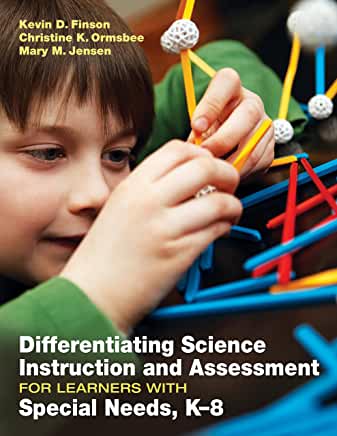
Differentiating Science Instruction and Assessment for Learners with Special Learning Needs, K-8
Teachers are required to provide appropriate science instruction to all students, including children with special needs. However, they are often left on their own to figure out how to effectively differentiate lessons and activities. Help is here! This timely, practical guidebook shows general and special educators how to retool science activities and assessments for students with learning disabilities, behavior disorders, and more. The authors cover a broad range of topics in an orderly, concise fashion, including:
National and state requirements for student learning and science literacy
- National and state requirements for student learning and science literacy
- Pedagogical strategies for collaborative learning groups, self-paced learning centers, literature circles, and team projects
- Grade-appropriate ways to revise science activities and assessments for biology, earth science, and physical science lessons
- Step-by-step instructions for using rubrics for evaluation, revision, and assessment
- Information on teacher collaboration and specific disabilities.
Also included are vignettes and checklists to assist teachers in bridging the gap between science and special education instruction and assessment. By adjusting the content, teaching critical thinking, and providing a variety of ways for learners to demonstrate their knowledge, you will give all students the chance to achieve academic success in science.
Available at:
(All links will open in new tabs.)
Corwin Press Sage:
https://us.corwin.com/en-us/nam/differentiating-science-instruction-and-assessment-for-learners-with-special-needs-k%E2%80%938/book235626
Amazon Books:
https://www.amazon.com/Differentiating-Science-Instruction-Assessment-Learners-ebook/dp/B008P5G4U2/ref=sr_1_2?dchild=1&keywords=Kevin+Finson&qid=1589140031&s=books&sr=1-2
Back to top
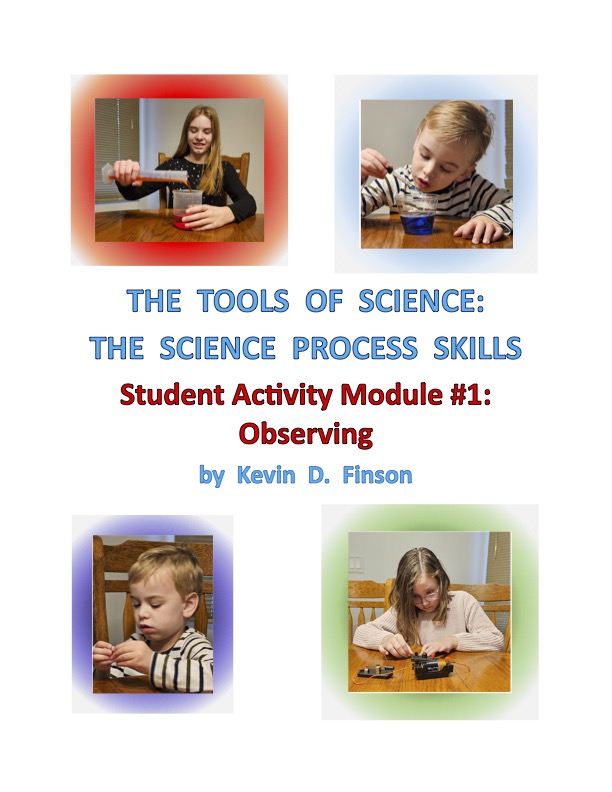
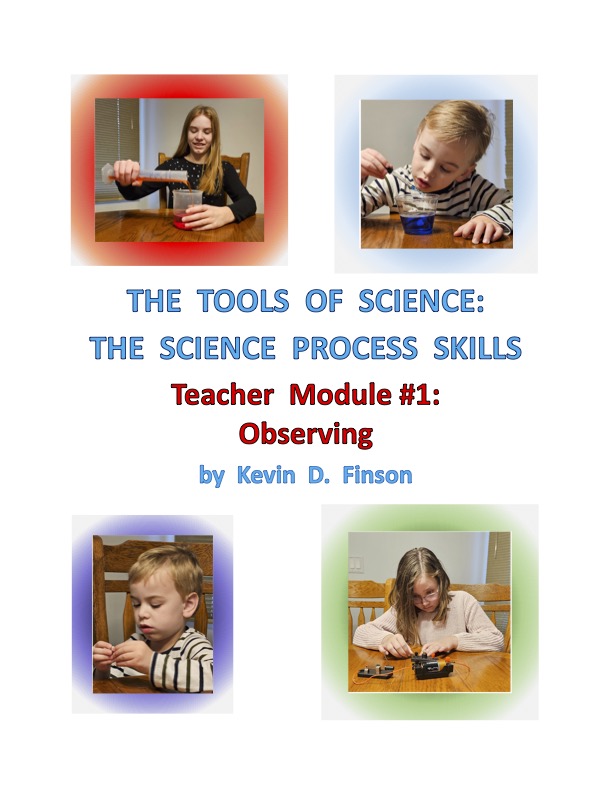
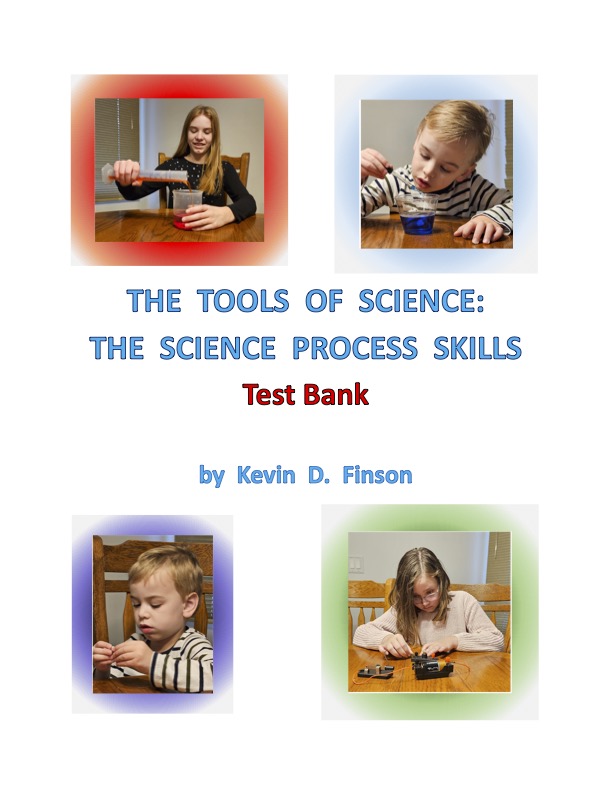
The Tools of Science: The Science Process Skills (The Series)
This series of 23 books or modules include 80 hands-on/minds-on science activities that help students learn about and apply the tools scientists use when doing their investigating and research. Those tools are called the science process skills. They are the foundation upon which good quality science learning is built. It is important students know the science process skills so they can effectively engage in the scientific enterprise. The fourteen science process skills include observing, inferring, measuring, recording and interpreting data, space-time relationships, communicating, formulating and using models, using numbers, classifying, identifying and controlling variables, questioning, hypothesizing, predicting, and experimenting.
The student module activities cover elementary (not primary grades K-2) and middle school level science, including focus on earth science, life science, and physical science. Some are great for review and all are designed to challenge students. The set can comprise an entire academic year of science, especially for home schooling.
The series also includes a teacher module to accompany each student activity module plus an introductory module for teachers. Each teacher module contains background information about the targeted science process skill, details about how to effectively teach each activity, and suggestions about obtaining the supplies and materials needed. Extensive effort has been put into selecting activities that can largely be done at home using supplies and materials from the kitchen, or readily obtainable from grocery stores, hardware stores, and even garden shops. If desired, the book can easily be supplemented with content reading from other sources including from the internet.
A bank of tests is also provided that includes objective tests for each student activity module. as well as suggestions for application (or “lab practical”) assessments.
Available as a series or individual modules at:
(Link will open in new tab.)
Amazon Books:
https://www.amazon.com/dp/B0CZNYMNDB?binding=paperback&ref=dbs_dp_rwt_sb_pc_tpbk
Back to top

