
Cases on STEAM Education in Practice
Finson, K.D. (2017). Finding and using the ART in science lessons. In Bazler, E. & Van Sickle, M. (Eds) Cases on STEAM Education in Practice. Hershey, PA: IGI Global, 183-205.
For many years, Science, Technology, Engineering, & Mathematics (STEM) education curricula have been successfully implemented into many school systems. A more recent trend has been the integration of arts into such curricula, changing STEM to STEAM. STEAM curricula have been shown to be significantly beneficial to students. This book is an essential research publication for the latest scholarly information on STEAM curriculum development, instructional design, and educational benefits. Topics covered in the book range from including fine arts, differentiated instruction, and student engagement. The chapter by Kevin Finson focuses on different levels of art as generated by students to explain their understanding of science concepts.
Available at:
(Links open in new tabs.)
IGI Global:
https://www.igi-global.com/book/cases-steam-education-practice/173686
Back to top
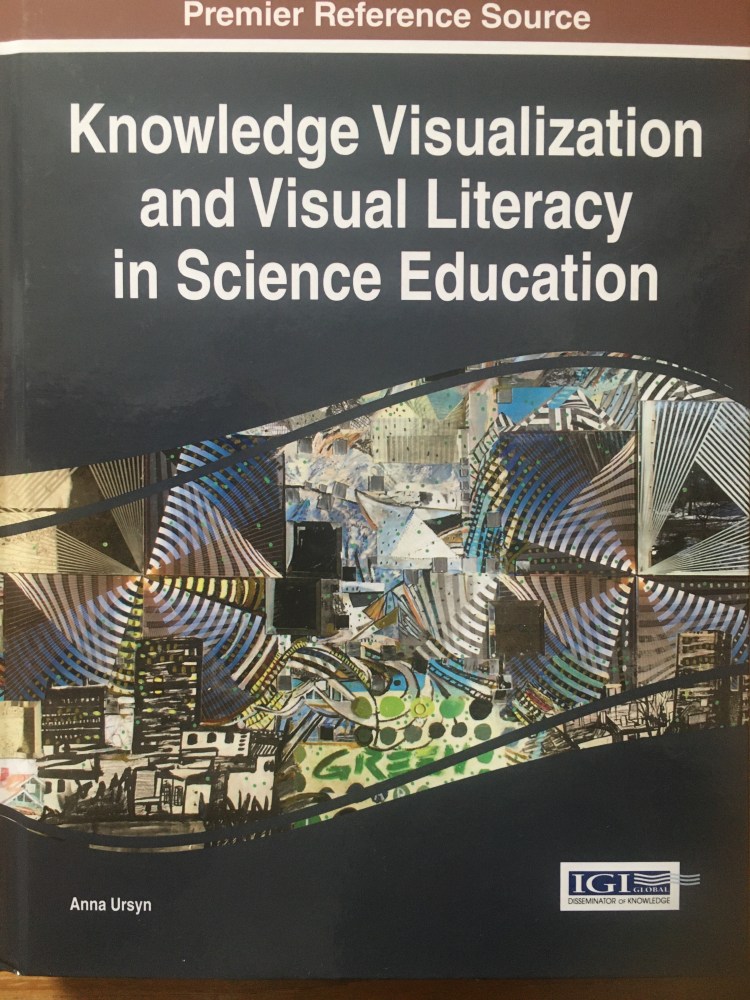
Knowledge Visualization and Visual Literacy in Science Education
Farland-Smith, D. & Finson, Kevin D. (2016). The difference between evaluating and understanding students’ visual representations of scientists and engineers. In Ursyn, Anna (Ed). Knowledge Visualization and Visual Literacy in Science Education. Hershey, PA: IGI Global, Advances in Educational Technologies and Instructional Design Series.
An important aspect to student success is effective communication within the learning environment. Higher levels of learning, retention, and understanding can be achieved by enhancing abstract concepts with visual media. This book is an authoritative resource for the latest scholarly research on the implementation of visual images, aids, and graphics in instructional settings. It focuses on how appropriate use of visual aids stimulate students’ critical thinking. The book highlights concept relating to cognition, communication, and computing. Topics covered include computation thinking, learning project design, multimodal learning, split brain human computer interface, stereo vision, use of collages, and video tutorials. The chapter by Donna Farland-Smith and Kevin Finson examines differences between the evaluation of and understanding of students’ visual representations of scientists and engineers in learning contexts.
Available at:
(Links open in new tabs.)
IGI Global:
https://www.igi-global.com/book/knowledge-visualization-visual-literacy-science/146991
Back to top
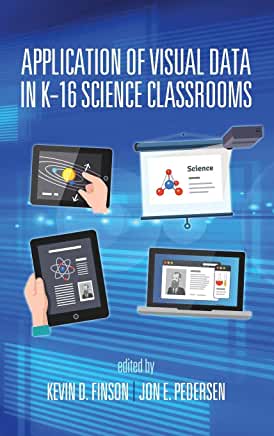
Application of Visual Data in K-16 Science Classrooms
Finson, K.D., Olson, J.K., & Emig. B. (2015). Navigating visual data literacy and inscriptions in the classroom. In Finson, K.D. & Pedersen, J.E, (EDs) Application of Visual Data in K-16 Science Classrooms. Charlotte, N.C.: Information Age Publishing.
This book examines visual data use with students (PK-16) as well as in pre-service in- service science teacher preparation. Each chapter includes discussion about the current state of the art with respect to science classroom application and utilization of the particular visual data targeted by the author(s), discussion and explanation about the targeted visual data as applied by the author in his/her classroom, use of visual data as a diagnostic tool, its use as an assessment tool, and discussion of implications for science teaching and/or science teacher preparation. The chapter by Kevin Finson, Joanne Olson, and Brandon Emig specifically examines the spectrum of types of visual data called inscriptions from their most concrete to the most abstract, and how science teachers can more effectively use that spectrum of inscriptions to teach science concepts.
Available at:
(Links open in new tabs.)
Information Age Publishing:
https://www.infoagepub.com/products/Application-of-Visual-Data-in-K-16-Science-Classrooms
Amazon Books:
https://www.amazon.com/Application-Visual-Data-Science-Classrooms/dp/1681230488/ref=sr_1_12?dchild=1&keywords=Finson&qid=1589126893&s=books&sr=1-12
Back to top
Going Back for Our Future
Finson, K.D. (2015). Robert K. James: Bringing vision to life. In Pedersen, J.E. & Finson, K.D. (EDS). Going back for our future II: Carrying forward the spirit of pioneers in science education. In Press: Information Age Publishing, 57-68.
“Who were the pioneers in science education, and what motivated them to do what they did?” This book is the second volume of an attempt to capture and record some of the answers to these questions—either from the pioneers themselves or from those persons who worked most closely with them. As with the first volume, we have attempted to include as many pioneers as possible, but we know that there are still many that are not included in this or the previous volume. As we consider our list of pioneers, we know that there are names on the list that most of us readily recognize. We also fully realize that there are names of whom few of us have heard—yet who were significant in their roles as mentors or idea development and teaching. We continue to be impressed with our science education “family tree” ever branching out to more individuals and connections. The stories in this volume continue to demonstrate how vital this network was in supporting the individual pioneers during their journey in difficult times and continues to be for those of us today in our own enterprise. The introduction by Kevin Finson and Jon Pederson introduces the guiding questions to which chapter authors responded, and lays out the framework and rationale for delving into the people who built the foundations of science education today.
Available at:
(Links open in new tabs.)
Information Age Publishing:
https://www.infoagepub.com/products/Going-Back-to-Our-Future-2
Amazon Books:
https://www.amazon.com/Going-Back-Our-Future-Education/dp/1681231921/ref=sr_1_19?dchild=1&keywords=Finson&qid=1589126973&s=books&sr=1-19
Back to top

Eureka, Again! K-2 Science Activities and Stories
Finson, K.D. (2015). Foreword. In Farland-Smith, D. & Thomas, J. (EDS.). Using children’s literature to teach about NoS. Submitted to co-editors for book to National Science Teachers Association Press.
“Who were the pioneers in science education, and what motivated them to do what they did?” This book is the second volume of an attempt to capture and record some of the answers to these questions—either from the pioneers themselves or from those persons who worked most closely with them. As with the first volume, we have attempted to include as many pioneers as possible, but we know that there are still many that are not included in this or the previous volume. As we consider our list of pioneers, we know that there are names on the list that most of us readily recognize. We also fully realize that there are names of whom few of us have heard—yet who were significant in their roles as mentors or idea development and teaching. We continue to be impressed with our science education “family tree” ever branching out to more individuals and connections. The stories in this volume continue to demonstrate how vital this network was in supporting the individual pioneers during their journey in difficult times and continues to be for those of us today in our own enterprise. The introduction by Kevin Finson and Jon Pederson introduces the guiding questions to which chapter authors responded, and lays out the framework and rationale for delving into the people who built the foundations of science education today.
Available at:
(Links open in new tabs.)
Amazon Books:
https://www.amazon.com/Eureka-Again-Science-Activities-Stories/dp/1681403161/ref=sr_1_1?dchild=1&keywords=Donna+Farland-Smith&qid=1589241676&s=books&sr=1-1
Back to top
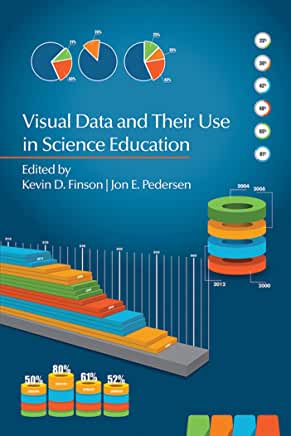
Visual Data and Their Use in Science Education
Finson, K.D., & Farland-Smith, D. (2013). Applying Vosniadou’s conceptual change model to visualizations on conceptions of scientists. In Finson, KD. & Pedersen, J.E. (EDs): Visual data and their use in science education, pp 47-76. Charlotte, N.C.: Information Age Publishing.
Visual Data in Science Education builds upon previous work done by the editors to bring some definition to the meaning of visual data as it relates to education, and highlighted the breadth of types and uses of visual data across the major academic disciplines. In this book, the editors have brought this focus specifically to science education through the contributions of colleagues in the field who actively research about and engage in teaching with visual data. The book begins by examining how the brain functions with respect to processing visual data, then explores models of conceptual frameworks, which then leads into how related ideas are actuated in education settings ranging from elementary science classrooms to college environments. The chapter by Kevin Finson and Donna Farland-Smith examines one conceptual change model developed by Stella Vosniadou that can be used to explain how and why students view scientists in the ways they do, and how those views can be impacted through appropriately designed instructional experiences.
Available at:
(Links open in new tabs.)
Information Age Publishing:
https://www.infoagepub.com/products/Visual-Data-and-Their-Use-in-Science-Education
Amazon Books:
https://www.amazon.com/Visual-Data-Their-Science-Education-ebook/dp/B01FNA387I/ref=sr_1_32?dchild=1&keywords=Finson&qid=1589126973&s=books&sr=1-32
Back to top
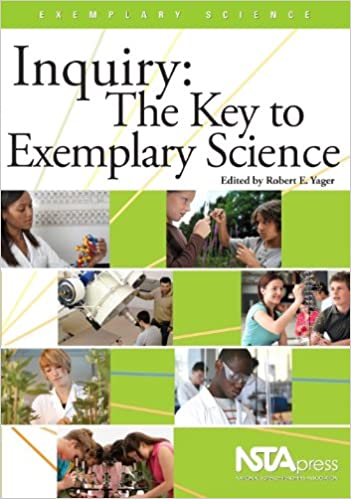
Inquiry: The Key to Exemplary Science
Wolffe, R. J., Finson, K. D., Edgcomb, M. R., McConnaughay, K. D., & Britner, S. L. (2009). Developing inquiry skills along a teacher professional continuum. In Robert E. Yager (Ed.) Inquiry: The key to exemplary science (pp. 83-94). Arlington, VA: National Science Teachers Association.
This book provides elementary science teachers exemplary advice and techniques for teaching via scientific inquiry. The book’s 18 chapters illustrate various forms of inquiry along with detailed information for planning and delivering inquiry instruction. As editor Yager notes, inquiry is a synonym for science, starting with asking questions, collecting evidence, formulating explanations, and arguing with others about the validity of the explanations. The chapter written by Kevin Finson and colleagues describes an innovative elementary science teacher preparation course that immerses students into inquiry experiences connected to information about inquiry learning. The aim of the course is to help elementary teachers better understand what inquiry is and how to utilize it in their own classrooms.
Available at:
(Links open in new tabs.)
Amazon Books:
https://www.amazon.com/Inquiry-Key-Exemplary-Science-PB192X6/dp/1935155040/ref=sr_1_28?dchild=1&keywords=Robert+E.+Yager&qid=1589242784&s=books&sr=1-28
Back to top
Cases in Middle and Secondary Science Education
Finson, K.D. (1998). “Response to Eric Pyle’s Case.” in Chapter 2 of Koballa, T.R. & Tippins, D. The promise and dilemmas of teaching middle and secondary science, Merrill Education/Prentice Hall, Englewood Cliffs, NJ.
This book highlights situations and challenges associated with middle and secondary school science teaching. For each of case presented, experts provide suggestions for improving instructional practice and stimulating students’ creative thinking in a scientific vein. Each of the ten chapters includes three to four cases all relating to a common theme. The final chapter delineates a methodology for creating engaging, instructional cases from one’s personal teaching experience. The chapter provided by Kevin Finson is a response to a case shared by colleague Eric Pyle who struggled with a student who has a learning disability and is disruptive in class. Kevin suggests several steps that could be used to help the student, including modifying science activities and learning materials so they are more accessible to that student with his particular needs.
Available at:
(Links open in new tabs.)
Amazon Books:
https://www.amazon.com/Cases-Middle-Secondary-Science-Education/dp/0131127985/ref=sr_1_3?dchild=1&keywords=Thomas+R.+Koballa&qid=1589242272&s=books&sr=1-3
Back to top
Science Education in the Rural United States: Implications for the Twenty-First Century (1995 AETS Yearbook)
Finson, K.D. (1998). “Response to Eric Pyle’s Case.” in Chapter 2 of Koballa, T.R. & Tippins, D. The promise and dilemmas of teaching middle and secondary science, Merrill Education/Prentice Hall, Englewood Cliffs, NJ.
This yearbook was produced by the Association for the Education of Teachers of Science. The focus of the yearbook was science education in rural America. The chapter provided by Kevin Finson and Michael Dickson examined distance learning in rural settings, beginning with the earliest documented distance learning efforts in the U.S. and continuing up through the most recent efforts (up to 1995).
Out of Print
Back to top
A Year of Inquiry
Finson, K.D. (2013). Inference or observation? In Froschauer, L A Collection for Elementary Educators: A Year of Inquiry. Arlington, VA: National Science Teachers Press.
The NSTA journal Science and Children editorial team has received a significant number of manuscripts focusing on inquiry over the years. Journal readers continually clamor for more on the topic of inquiry, underscoring that there is a persistent need for more essential understanding of what inquiry is in the classroom setting. The journal editors sought articles for K-5 classrooms providing guidance for teaching via inquiry strategies. Each of the book’s nine topic sections begin with an introduction by a national leader in science education and then includes three related articles with connected activities for the elementary science classroom. Among the crucial subjects covered are understanding what a scientist does, developing process skills, record keeping in science notebooks, structuring investigable questions, collecting and analyzing data, and sharing research results. The section provided by Kevin Finson focuses on the science process skills of observing and inferring. It explains the difference between these often closely connected skills, and provides an example of a simple activity that can be used to help students learn to differentiate between the two.
Available at:
(Links open in new tabs.)
Amazon Books:
https://www.amazon.com/Year-Inquiry-Collection-Elementary-Educators/dp/1936959348/ref=sr_1_6?dchild=1&keywords=Linda+Froschauer&qid=1589243658&s=books&sr=1-6
Back to top

CESI Sourcebook VII: Toys
Finson, K.D. (1993). Energy storage in a mechanical mouse. CESI Sourcebook VII: Toys, Washington, D.C.: Council for Elementary Science International, National Science Teachers Association, 112-114.
Children sometimes wonder how and why toys do what they do. This is a good time to help them focus on natural phenomena, provoke imagination, and promote scientific thinking. This book presents 53 classroom-tested activities to teach science with toys. Each has two components: (1) the science content to be understood; and (2) the “sciencing” of the activity. The activities contain the following information: Focus, Challenge, Materials, Resources, Safety Note, Advance Preparation, Time, Procedure, Further Challenges, and References. The activity provided by Kevin Finson explains how a simple device called a mechanical mouse can be constructed by students and then used to investigate the relationship between potential and kinetic energy.
Available at:
(Links open in new tabs.)
ERIC Institute of Education Sciences:
https://eric.ed.gov/?id=ED359053
Back to top

CESI Sourcebook VI: Earth Science Activities for Elementary and Middle Schools
Finson, Kevin D. (1989). The half life and times of geologic materials. CESI Sourcebook VI: Earth Science Activities for Elementary and Middle Schools. Council for Elementary Science International, National Science Teachers Association, Washington, D.C.
This book provides exceptional earth science activities for elementary and middle school teachers to use with their students. The activities are inquiry-oriented. The activity provided by Kevin Finson is designed for middle school students, and uses pennies in a shoebox that are shaken multiple times to show how pennies “decay” or flip with each shaking, thus representing decaying radioactive atoms in a geologic material.
Not Available
Back to top
Return to Home Page
 Kevin D. Finson Author Page